I arrived quite late to this week’s session because I was waiting for my parts to complete 3D-printing. When I arrived at the session, I was pleasantly surprised by the large attendance. I myself was also surprised when I found out nobody had brought fruits or vegetables, because for whatever reason I had taken that fact for granted over the last 2 weeks. So, here’s your annual reminder to start early, plan ahead and not take things for granted.
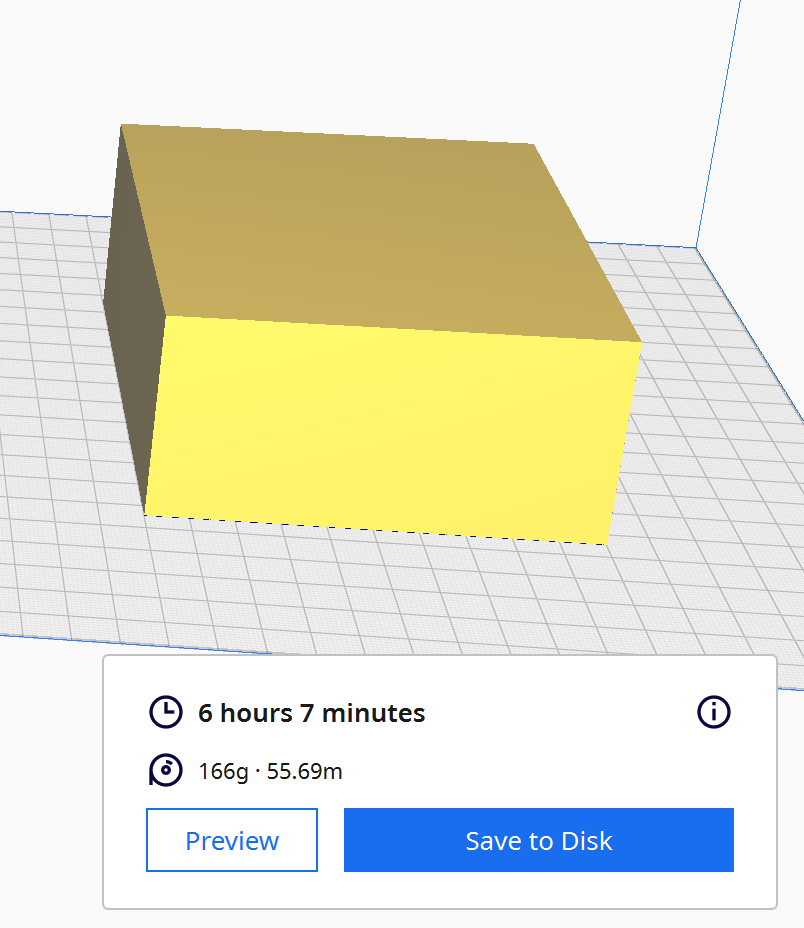
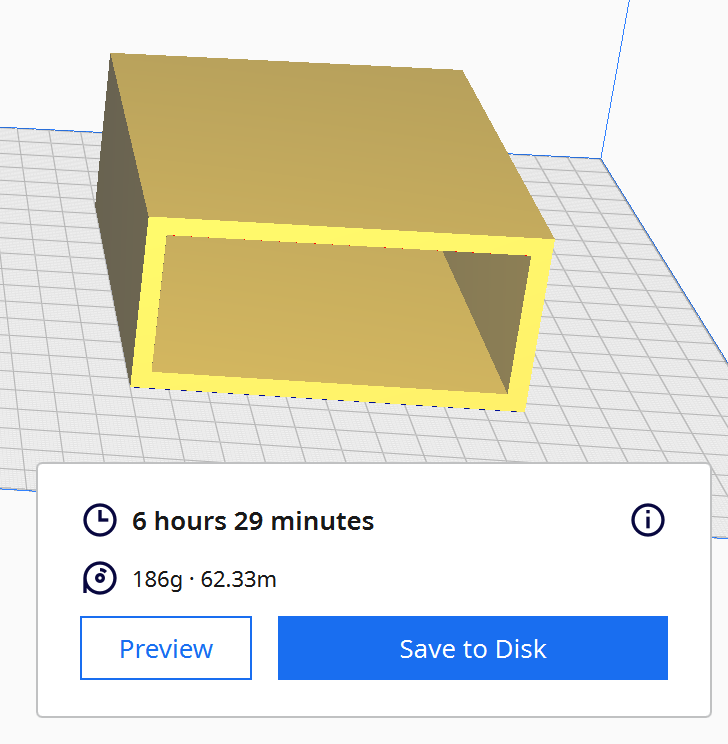
While I was talking to one of the other volunteers there, they mentioned that since they had to use a shared 3d-printer, they had “hollowed out” some of their parts to enable them to print faster. For example, in their project, they made a rectangular hole in their handle to enable it to print faster. However, I wondered if the time required to print the additional inner walls and supports negated the desired time savings. So, I devised a thoroughly un-scientific experiment
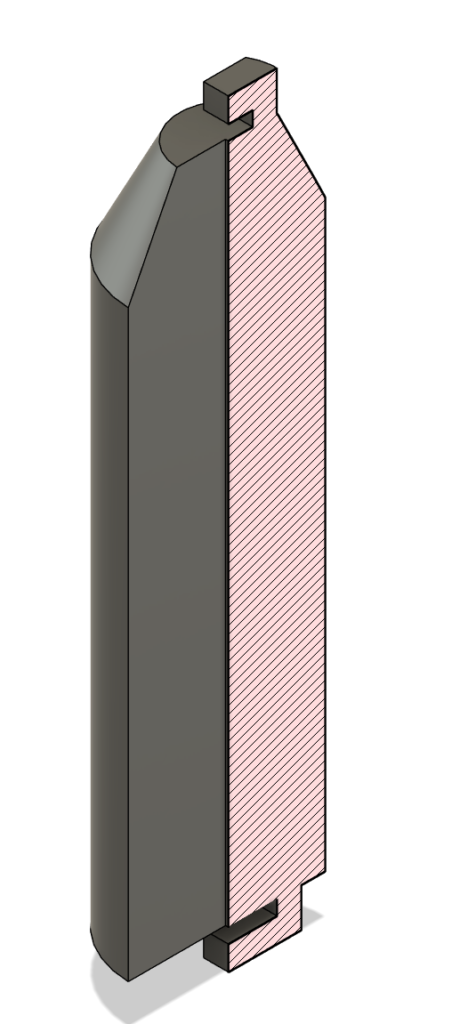
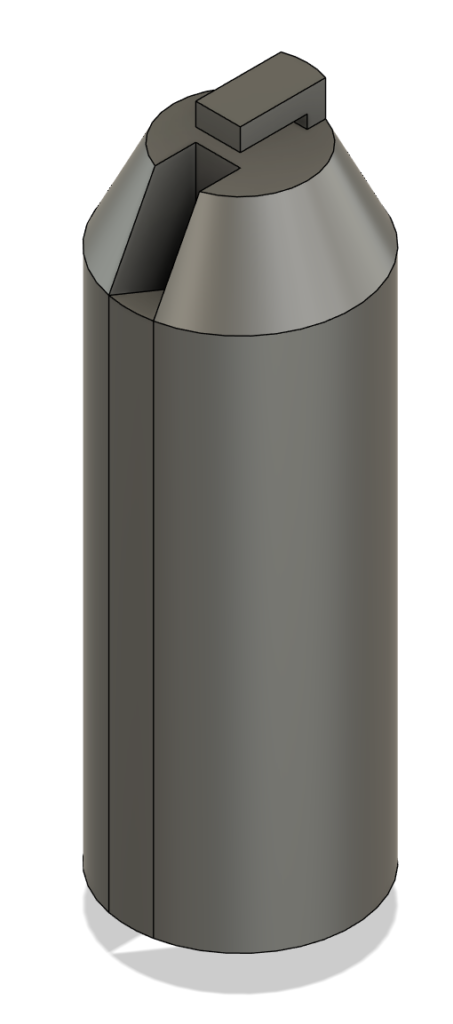
Solid cuboid
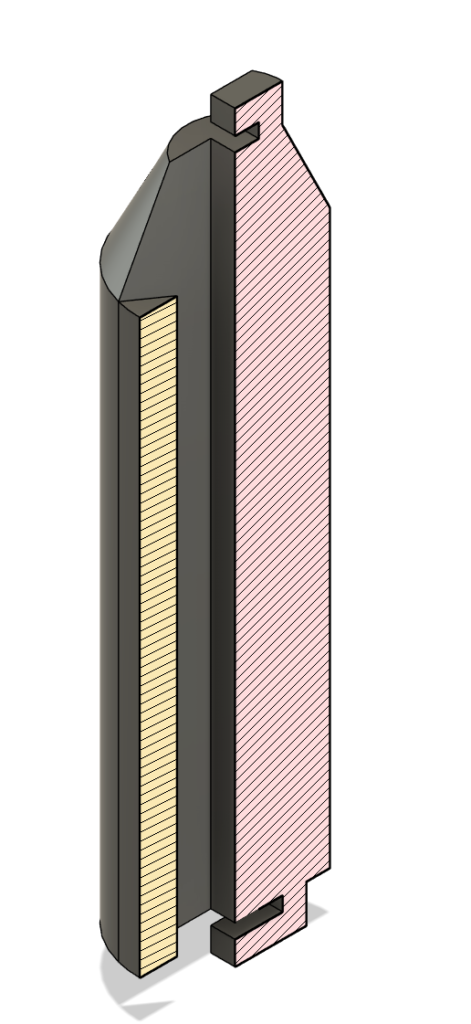
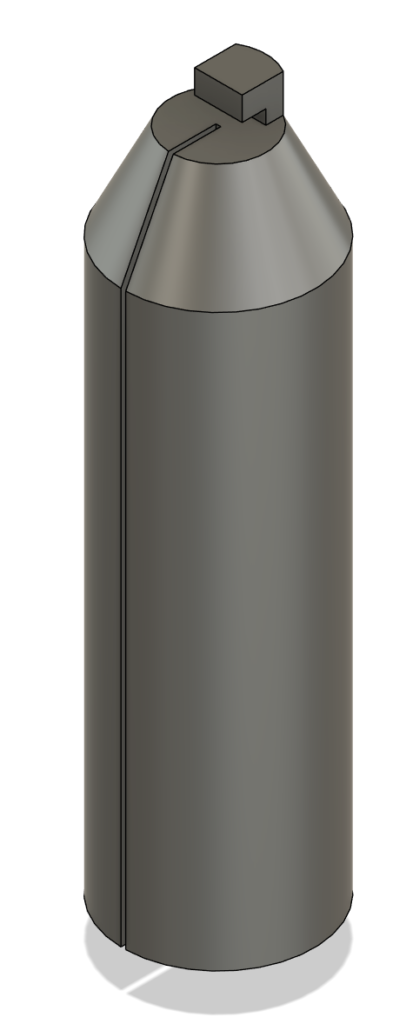
Cuboid with hollow void inserted and supports turned on
It’s hardly a proof that inserting hollow sections in prints results in longer print time. The results will vary depending on the shape of the part, model of printer, material(s), etc. However, I think it is a worthwhile reminder to test your conjectures and assumptions before you base your decisions on them.
After I made a trip to the supermarket to purchase an apple and carrot, I returned to try the peeler fruit/veg holder V2. I video-recorded myself demonstrating it to send to Alpha. The first round with the apple went perfectly. While only using one hand, I pushed a fork into the axle, placed the axle in the housing and skewered the fork into an apple. The second round with the apple didn’t go so well.
Gore warning (basically I injured my finger)
Unlike the apple, which required minimal force to skewer a fork into, the hard raw carrot required quite a bit of force. As I was giving the fork one last push into the carrot, the carrot split apart, and all the force I was exerting on the fork went into my left index finger. Thankfully, after an expensive doctor’s visit, I was bandaged up and have since recovered.
The keen-eyed among you may notice a certain sentence in last week’s “What Happened During the Sesison” that I didn’t follow up on in “Problems Identified”, namely
Additionally, if the user’s hand slips, they may get cut by the fork’s prongs.
– Inclusive Tools Week 2
This was mainly because I dismissed the risk as negligible, evidently it isn’t. So, do remember that provided enough force, any vaguely sharp object can cause serious injury.
Another problem I identified while testing was that because the entire axle had the same physical properties, the handle was flexible too, making it difficult to rotate the fruit/vegetable at times.
Beyond that, Bravo was another first-time attendee of this week’s MIT Sunday. While they were here, they shared about the difficulties they faced caring for their family member, Charlie. I elaborate more under the “Hand Protector V1” heading.
Verifying solutions to previously identified problems
When no fruit/vegetable is mounted, the handle falls to either side
No longer happens, yay!
The base of the housing is too slippery
The nano tape works very well, almost too well at times, adhering better to the table than the enclosure’s base. However, for now it doesn’t seem to be a significant problem.
It is difficult to pick up the handle when it’s resting on the table, especially with a stump + The axle is difficult to hold in position with a stump
The U-shaped handle seems to have resolved this.
“Skewering” the fruit/vegetable into the fork is awkward
The platform, coupled with the sticky base keeps the enclosure firmly in place.
The force from peeling often causes the axle to rotate (KIV in future)
The stopper does indeed make it significantly harder to rotate the axle, however it does not fully stop it from rotating.
Creation of peeler fruit/veg holder V3
Problems Identified
The action of skewering the fork into the fruit/vegetable is dangerous
The handle is too flexible
Problem Solving (KIV in future)
I decided to work on peeler fruit/veg holder V3 at a later date because a) Alpha wasn’t coming during the next session and b) I was more focused on Hand Protector V1
Hand Protector V1
To guide my problem solving, I’m using the Design Thinking framework.
Empathise
The following is information I’ve acquired from Bravo after multiple rounds of drafting designs and interviews.
Bravo (again, not their real name) was a participant in this week’s MIT Sundays session. Bravo shared that they were caring for their family member, Charlie. Charlie had a physical condition which caused their fingers to be constantly flexed in a contracted, curled up state. Additionally, because of Charlie’s mental condition, they would often feel frustrated, causing them to squeeze their hand hard. Thus, in order to prevent Charlie’s fingernails from damaging their palm, Bravo would place a rolled up towel in Charlie’s hands, separating their fingernails from their palm.
However, because of Charlie’s cognitive state, they did not understand why they needed to hold on to the towel, and would often drop it. To prevent that, Bravo had convinced Charlie that the towel was actually money.
Additionally, when replacing the cloth, Bravo faced difficulties pulling open Charlie‘s fingers to slide in a new one.
When we let Bravo handle the cylindrical section of a TPU printed part from the fruit/veg holder V2, they mentioned how it would be a good replacement. However, while discussing prototypes, Bravo also mentioned that they would wrap a cloth around the TPU printed part, in case Charlie had an allergic reaction to the TPU. Bravo would also mention later on that the towel enabled Charlie to get a better grip on the prototype.
Define
Problem Statement
–> Corresponding Design Requirement
If no physical barrier is put in place, because of Charlie’s naturally curled fingers and tendency to squeeze their hand hard, Charlie’s fingernails would damage their hand.
Create a physical barrier between Charlie’s fingernails and hand that: – Functions when the fingers are constantly flexed – Functions when the hand is squeezed hard
Charlie did not understand why they needed to hold the physical barrier (at that time, the towel) in their hand, and would often drop it.
The physical barrier must stay in place even when the hand is relaxed.
Bravo faced difficulties when sliding in a new cloth to replace the old one.
The barrier should be as easy as possible to insert into a curled hand
Bravo is concerned with Charlie having an allergic reaction to TPU and Charlie would have a firmer grip on the texture of a towel.
The barrier should function while wrapped in a towel
Ideate
Physical Barrier that functions with curled fingers and when squeezed hard
As Bravo mentioned, a 3D-printed TPU cylinder would be a possible replacement. However, one should always start with the problem statement, not from a solution they have in mind. What are some other ways I could create this physical barrier? On the fingernail side of the equation, I could make a thimble-like barrier that attaches to the fingers and covers the fingernails. On the palm side of the equation, I could make a flexible barrier that sticks to the palm.
However, since Bravo suggested the drop-in-replacement of a TPU cylinder, I will go ahead with it. If it doesn’t work, we can always explore other options such as those I just mentioned.
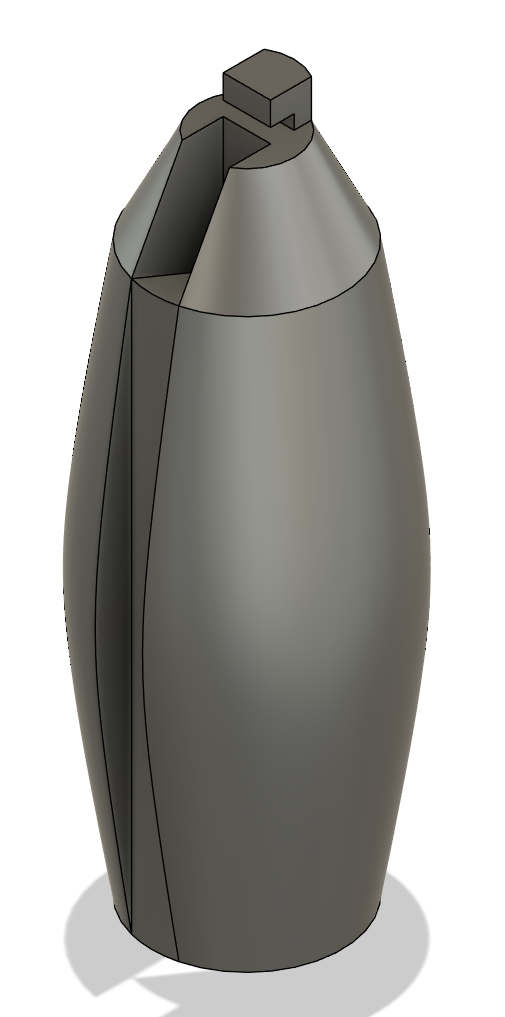
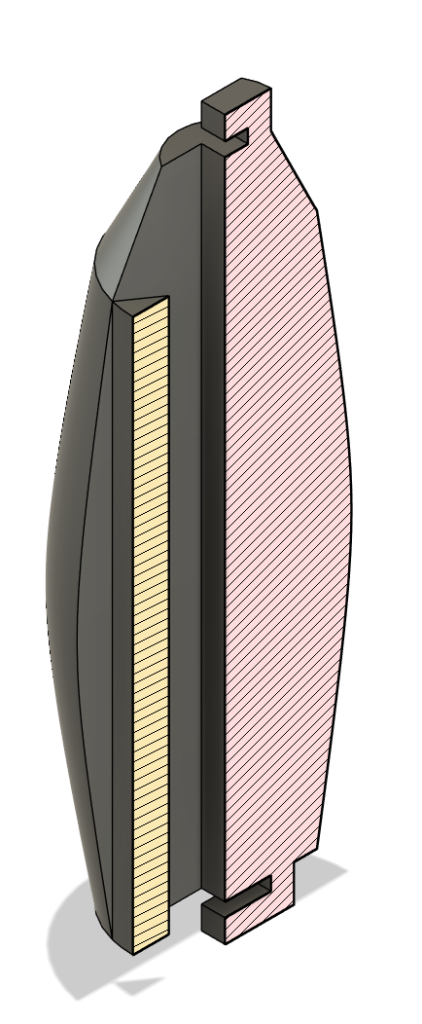
As I was typing this out, I was thinking about the ergonomics of the design and began looking at my own hand. Since our pointer, middle and ring fingers are longer than our thumb and pinkie, it might actually make sense for the middle of the cylinder to be of a larger diameter than the ends. Thus, perhaps I could have the middle be bowed out.
Staying in place even when the hand is relaxed
This barrier would need to be attached to something. The palm and fingers make more sense since they are closest to the location where the barrier will be, and they move along with the hand (as compared to, for example, the wrist). Attaching the barrier to Charlie’s fingers doesn’t seem wise because they move independently from each other and are likely too weak to support the weight of the barrier. So, we should attach the barrier to the palm of the hand.
To attach it to the palm, a strap first comes to mind. We can use an adjustable-length strap to determine what length of strap to use in subsequent prototypes. This strap would attach to the ends of the cylinder too.
Being as easy as possible to insert into a curled hand
I believe (I should have probably checked with Bravo) the main issue here is that Charlie’s fingers are in the way and need to be constantly pried away while inserting the replacement barrier.
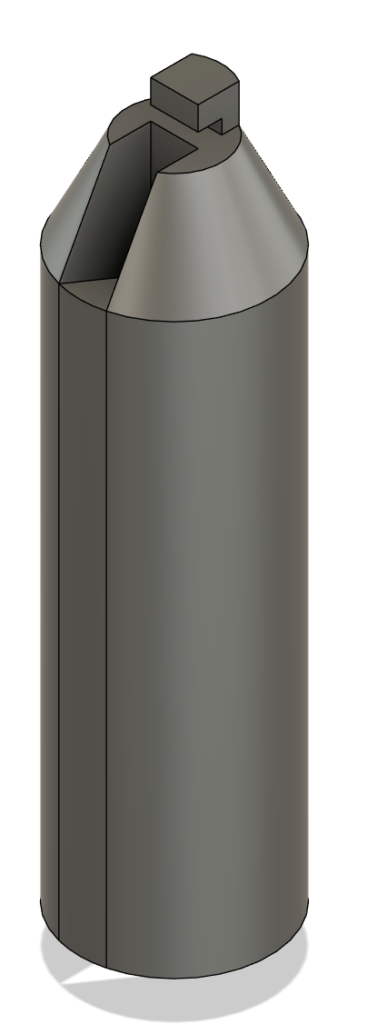
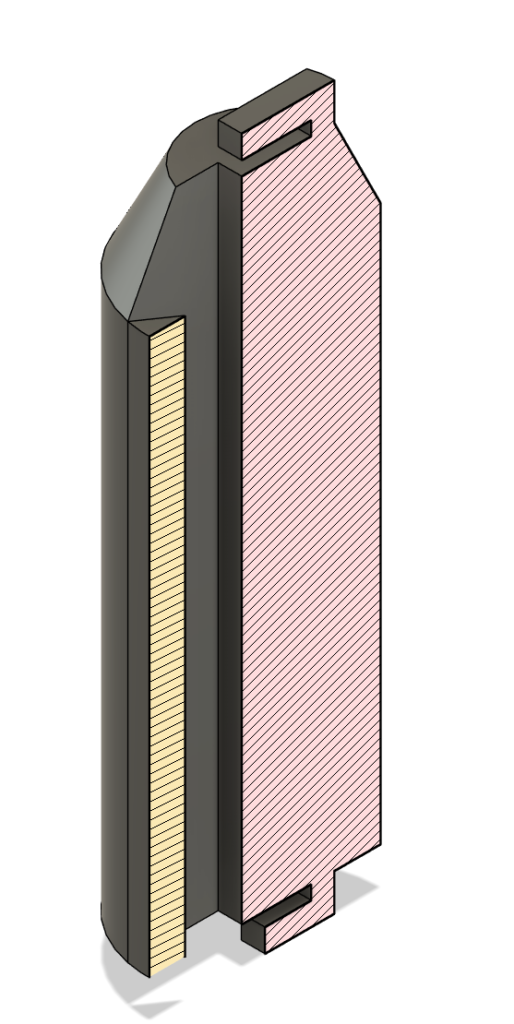
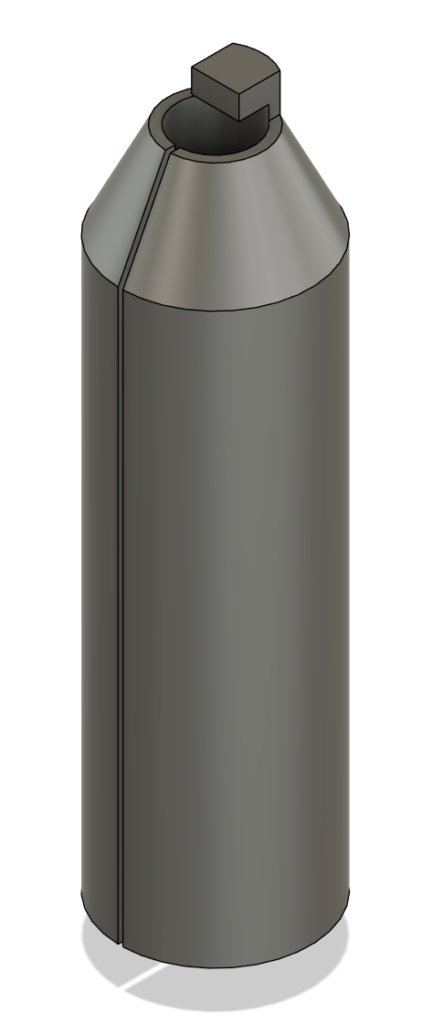
One way to make this process easier is to have a mechanism to push the fingers out of the way. At one end of the cylinder, I could attach something shaped like the bottom-half of a cone, using its slope to push fingers out of the way.
Another way would be to make some system to pull the fingers out of the way before they touch the barrier. However, if we wanted to maximise comfort, it would have to only pry away the next finger in front of the barrier, one by one. Anyways, this seems a little overcomplicated for something that would be better done by Bravo’s hands which, in contrast, have full dexterity and sensing.
Function even while wrapped in a towel
Regarding the issue of towel sizing, it could always be cut to the required width and length. However, the larger issue is holding it in place.
I could hold the towel in place with a rubber band or adhesive. These may not be secure enough though. So I thought of holding it in place with a proper mechanical clamp.
I could try locking both ends of the towel between a wedge and matching slot. Alternatively, I could simply add a slot in the cylinder, squeezing the ends of the towel into this slot. Or, how about a cylinder with a hollowed out centre to store the excess cloth?
In the spirit of my so-favoured principle, I designed prototypes for each of these variations to test them out, rather than attempt to predict what would work best while designing.
Prototyping
Physical features
Design Requirement
–> Physical Feature(s)
Physical Barrier that functions with curled fingers and when squeezed hard
Cylinder shape OR cylinder bowed out in middle AND Different infill patterns and percentages
Staying in place even when the hand is relaxed
Adjustable-length strap attached at the ends
Being as easy as possible to insert into a curled hand
Bottom-half-of-cone shapes attached to one end of cylinder
Function even while wrapped in a towel
(Wedge+Slot OR Slot only) AND (Solid OR Hollow centre to store excess towel)
Physical Specifications
Prototype No.
Cylinder diameter
Concentrc infill percentage
Wedge
1 (“base model”)
Straight (40mm)
20
Wedge+Slot; Solid Centre
2
Straight (40mm)
50
Wedge+Slot; Solid Centre
3
Straight (40mm)
20
Slot Only; Solid Centre
4
Straight (50mm)
20
Wedge+Slot; Solid Centre
5
Centre wider (40-55mm)
20
Wedge+Slot; Solid Centre
6
Straight (40mm)
20
Slot Only; Hollow Centre
Designing the strap
Let’s try not to reinvent the wheel here-
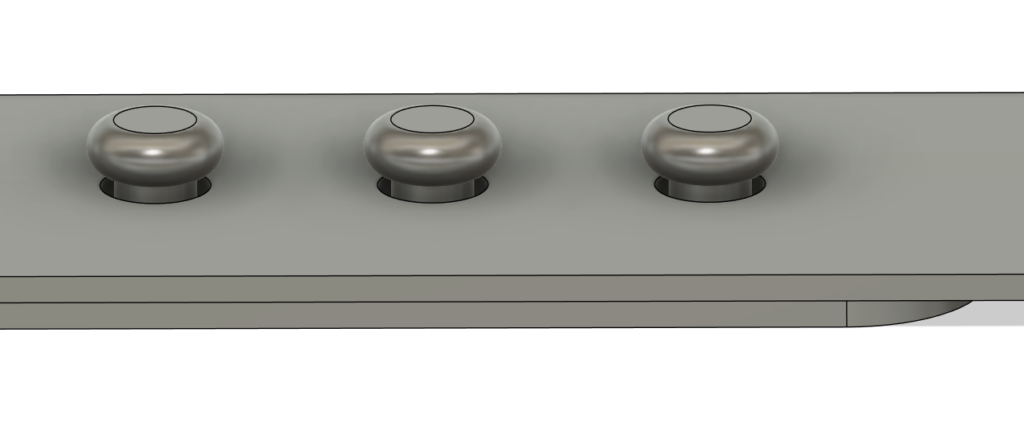
Most of the designs I saw (that were fully 3d printed) involved protruding “latchers” that can interlock with any of multiple holes along the strap. So that’s what I’m gonna do.
To attach the strap to the cylinder, I just did what seemed most obvious at that time and used hooks.





Leave a Reply